A Science Classroom, Rebuilt in Days
When a third-grade student needed to learn away from the classroom, Garnet Valley used Golpo to adapt its science curriculum quickly—keeping educators in control and learning on track.

A third-grade student needed to continue learning away from the classroom for medical reasons. Garnet Valley had the science curriculum. What it did not have was a digital course ready to travel with the student.
The case study at a glance
| Customer | Garnet Valley School District |
|---|---|
| Sector | K–12 public education |
| Immediate need | Preserve access to third-grade science for a student learning asynchronously for medical reasons |
| Approach | Use trusted teaching resources, activities and learning objectives to produce reviewable lab explainers |
| Reported result | A rapid, “pretty much seamless” transition from the traditional classroom to asynchronous science learning |
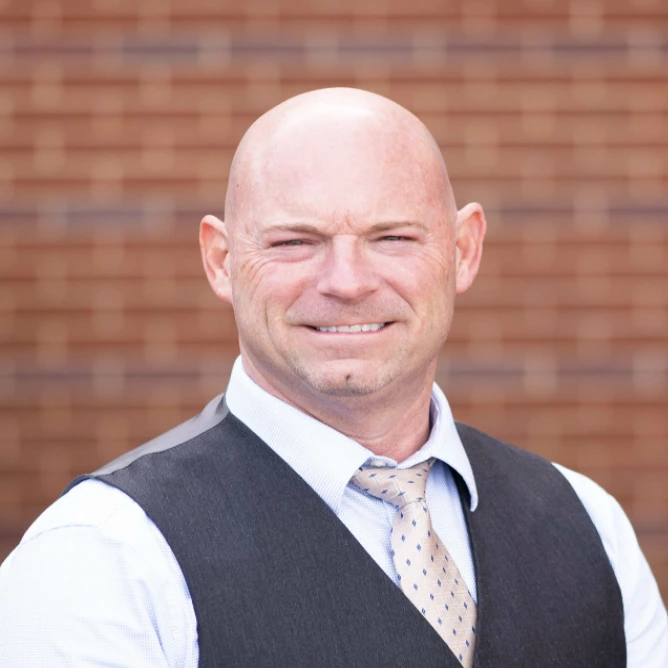
“Every student is an asynchronous learner. When the bell rings and the bus picks them up, the teacher is no longer there.”
Portrait: Garnet Valley Curriculum.
The customer: purposeful technology, not technology for its own sake
Garnet Valley School District serves a suburban community outside Philadelphia. Its technology work extends beyond devices and infrastructure into course design, professional learning, online instruction and the practical use of emerging tools.
Dr. Samuel Mormando has helped lead that work for more than a decade. His discipline is straightforward: “We don’t use technology for technology’s sake. There has to be a purpose.” That principle became concrete when one elementary student needed a different path into the classroom.
The challenge: a strong curriculum that could not travel
Garnet Valley had a robust science curriculum for in-person teaching—complete with teacher resources, activities, laboratory work and learning objectives—but it did not have a ready-made digital science course that could reproduce the classroom experience.
The district faced a familiar K–12 constraint: the content existed, but the delivery format did not.
Building a traditional online course or producing a library of videos from scratch could have required extensive scripting, recording and editing. Teachers and instructional coaches also needed to move quickly while protecting the integrity of the curriculum already in use.
The solution: use the lesson itself as the production brief
Garnet Valley’s teachers and instructional coaches used Golpo to work from resources they already trusted: teaching materials, lab activities and learning objectives. Golpo handled production tasks—organizing an explanation, generating visuals, adding narration and timing scenes—while educators retained responsibility for instructional accuracy and fit.
The working process
- Select the source and objective. Begin with the district’s existing lesson resources and one clear learning goal.
- Create a concise explainer. Use Golpo to produce an initial video explanation of the concept or laboratory activity.
- Review as educators. Check the draft for accuracy, sequencing, clarity and suitability for the student.
- Place it in the learning experience. Share the approved video alongside the rest of the student’s asynchronous science work.
The goal was not to recreate every feature of an in-person classroom on a screen. It was to mirror the essential learning experience closely enough that the student could follow the same concepts and activities from another setting.
Why the approach worked
It began with a student need
The district did not begin with a general directive to deploy AI. It began with a specific access problem and a clearly defined audience. That made the test concrete: could the student continue the science curriculum with minimal disruption?
It preserved teacher judgment
Educators supplied the source material, set the objective and reviewed the result. Golpo accelerated production; it did not decide what the student should learn.
It adapted content the district already trusted
The team did not abandon a strong curriculum because the delivery context changed. It translated existing materials into a format the student could reach.
It reduced the production burden
“Teachers don’t have the time to do those instructional videos,” Mormando said. Golpo provided what he described as a “nice, neat, clear” way to make them, returning attention to instructional work.
It was manageable by the people closest to instruction
Teachers and coaches already had access to Golpo and could run the workflow themselves. Fewer handoffs helped the district respond quickly.
The impact: continuity at the moment it mattered
According to Mormando, the student moved from the traditional classroom to asynchronous learning “pretty much seamlessly.” The district could provide explanations of science labs and activities without waiting for a complete digital curriculum to be built.
The evidence in this story is qualitative rather than a controlled outcome study, and it should be read that way. Even so, the operational results are clear:
“Golpo has really been a game changer. It gives our teachers an opportunity to explain lab activities in a different way, provide an overview of a new unit or break down a difficult math problem.”
Beyond one student: learning continues after the bell
Mormando’s phrase “every student is an asynchronous learner” reframes the use case. Asynchronous support is not only for students formally enrolled in virtual programs. It can help any learner who needs to pause, revisit or access an explanation after class.
That makes the Garnet Valley story less about emergency digitization and more about resilient instructional design. A clear explainer can serve a student learning from home, a child reviewing a difficult concept at night or a teacher looking for another way to introduce a unit.
The broader lesson is not that every lesson should become a video. It is that districts can prepare for variability by building a lightweight way to translate trusted curriculum into formats students can reach when time and place change.
The leadership lesson: outcomes over optics
For Mormando, the case study reinforces a wider principle for AI adoption in schools: “Start small, and start with a problem or a pain point, not a tool.”
| Decision | Question for leaders |
|---|---|
| Problem | Is it specific and worth solving? |
| Value | Does the tool improve access, clarity, efficiency or personalization? |
| Teacher judgment | Are educators still responsible for instructional decisions? |
| Review | Can the result be checked before a student sees it? |
| Usability | Is the workflow simple enough for the people who will actually use it? |
In Garnet Valley, the technology earned its place by helping one student stay connected to science and helping educators act quickly. The innovation was not the existence of an AI-generated video. It was the district’s ability to preserve learning when the classroom had to move.

From the customer conversation
Golpo co-founder Shraman Kar interviewed Dr. Mormando for the Educator Spotlight series. Read the complete Q&A: “Every Student Is an Asynchronous Learner.”
Portrait: Shraman Kar’s official website.
A note on evidence and claims
This case study combines the district’s public organizational context with a recorded customer interview. The account of the student’s transition, the use of Golpo and the time returned to teachers comes from Dr. Mormando. No independently audited cost-saving percentage, controlled student-learning result or numerical ROI was supplied, so none is claimed.
That boundary makes the story more useful, not less. The documented result is meaningful: educators adapted trusted curriculum quickly enough to maintain continuity for a student whose learning environment had to change.
Frequently asked questions
How did Garnet Valley use Golpo for asynchronous learning?
Teachers and instructional coaches used existing science resources, activities and learning objectives to create narrated explanations of laboratory activities for a third-grade student learning away from the classroom.
What result did Garnet Valley report?
Dr. Mormando said the student transitioned from the traditional classroom to asynchronous learning “pretty much seamlessly.” This is a qualitative customer account, not a controlled learning-outcomes study.
Did AI replace the teacher or curriculum?
No. Educators supplied the trusted curriculum, defined the learning objective and reviewed the result. Golpo accelerated production while teacher judgment remained central.
Have a lesson that needs to travel?
Start with one approved document, one learning objective and one educator review. Golpo can turn the source into a clear first-draft explainer.
Tags


